
Evaporator Coil: how the AC evaporator coil works in Roswell homes
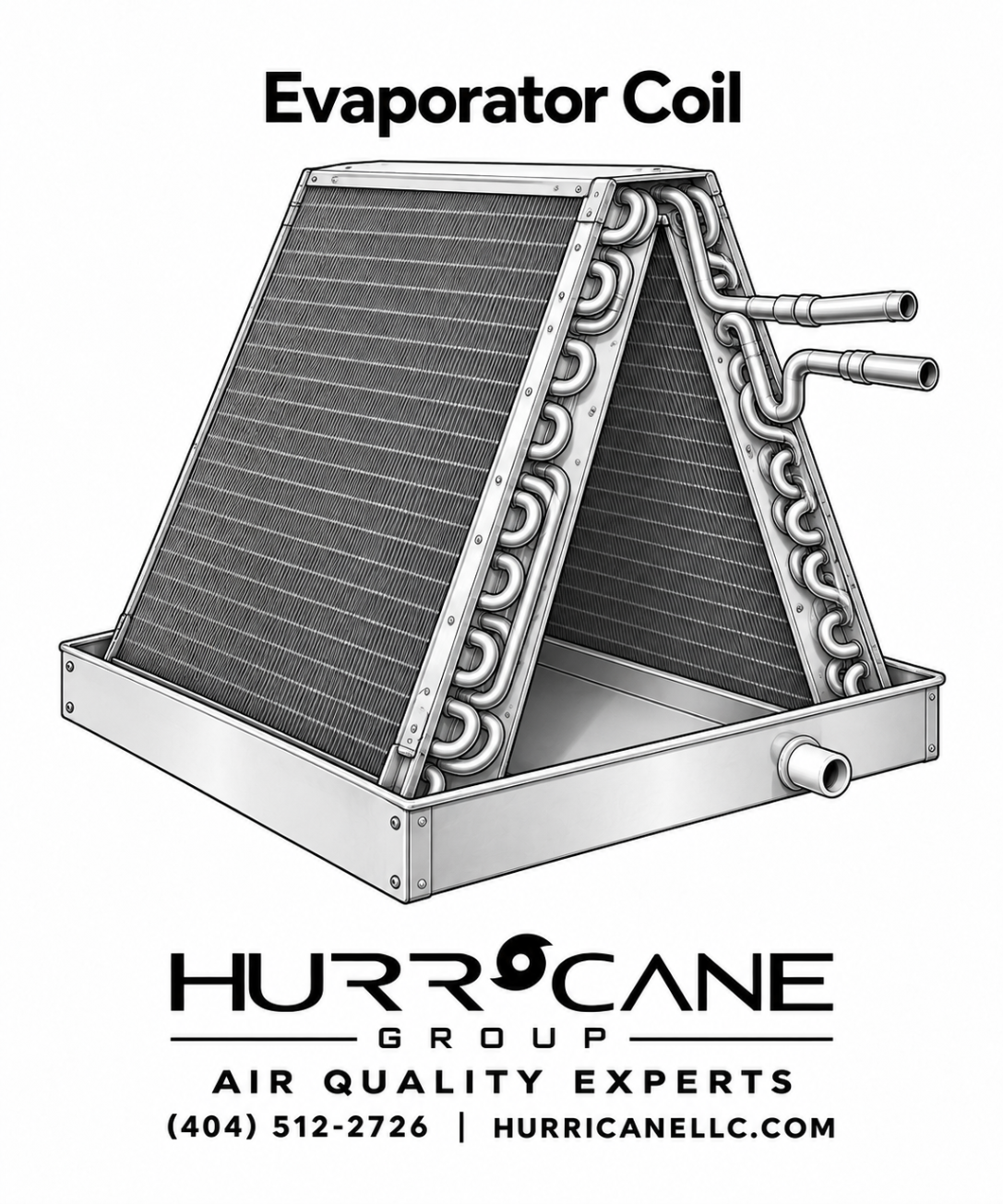
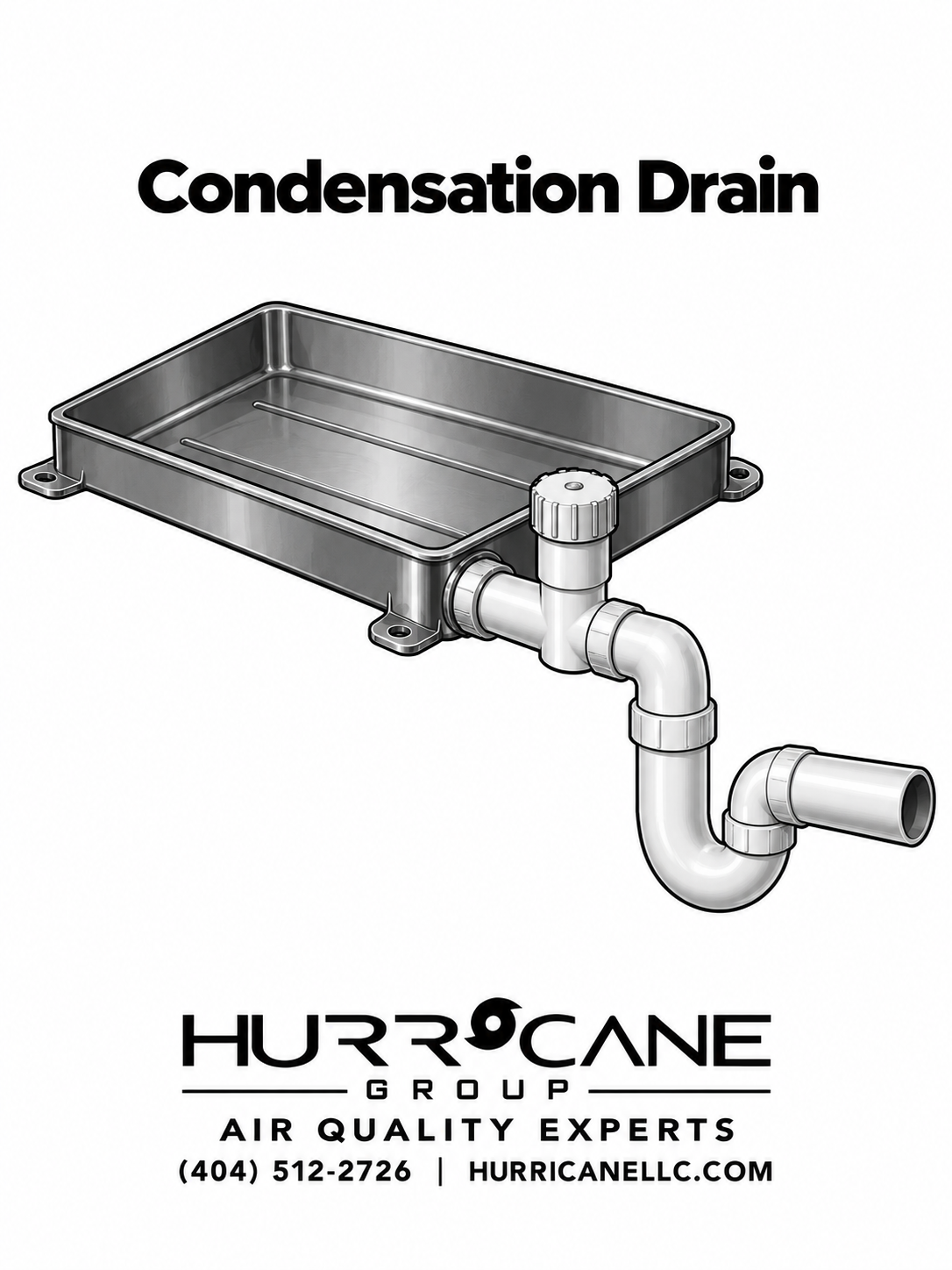
The evaporator coil is the A-shaped coil above the furnace or air handler where cold refrigerant absorbs heat from your home's air. It also pulls moisture out of the air, which drips into the drain pan below it.
How it works
Liquid refrigerant reaches the coil through a metering device and expands, dropping to around 40°F. Warm house air blows across the thin aluminum fins and copper tubes, the refrigerant absorbs that heat and boils into a vapor, and the cooled air moves on to the supply ducts.
Because the coil is colder than the air's dew point, water condenses on the fins. On a humid Georgia day a typical home system can remove several gallons of water. That water runs into the pan and out the condensate line.
A dirty coil is one of the most common hidden problems. Dust that slips past the filter sticks to wet fins, cuts airflow, lowers capacity and gives mold a place to grow.
Signs of a problem
- Ice on the coil or the larger copper line
- Musty smell when the system starts
- Cooling slowly even with a new filter
- Water in the secondary pan
- Hissing near the indoor unit (possible leak)
Simple upkeep
- Change filters on schedule — it's the coil's only protection
- Have the coil inspected during annual service
- Keep the drain pan and line clear
- Address musty odors early before growth spreads to ducts
The evaporator coil in Roswell homes
Tree cover drops leaves and seed pods into outdoor units, and humid crawlspaces are hard on ductwork and drains. In Roswell's mix of historic homes around Canton Street, wooded 1980s subdivisions and many basement and crawlspace installs, we see evaporator coil issues most often in homes around Historic Roswell, Horseshoe Bend, Martin's Landing.
What our technicians check: We inspect the coil face with a light and mirror, measure the temperature split and check for oily spots that point to refrigerant leaks. Coil cleaning is done in place with a non-acid, coil-safe cleaner.
Common questions
Why is my evaporator coil freezing?
Usually low airflow (dirty filter, closed vents, weak blower) or low refrigerant. Turn the system off and let it thaw, then have it checked.
How often should the evaporator coil be cleaned?
Inspect it every year. Many homes need cleaning every 2–3 years, sooner with pets or a history of filter problems.
Can a leaking evaporator coil be repaired?
Small accessible leaks sometimes can. Many coils with repeated leaks are better replaced, matched to the outdoor unit.
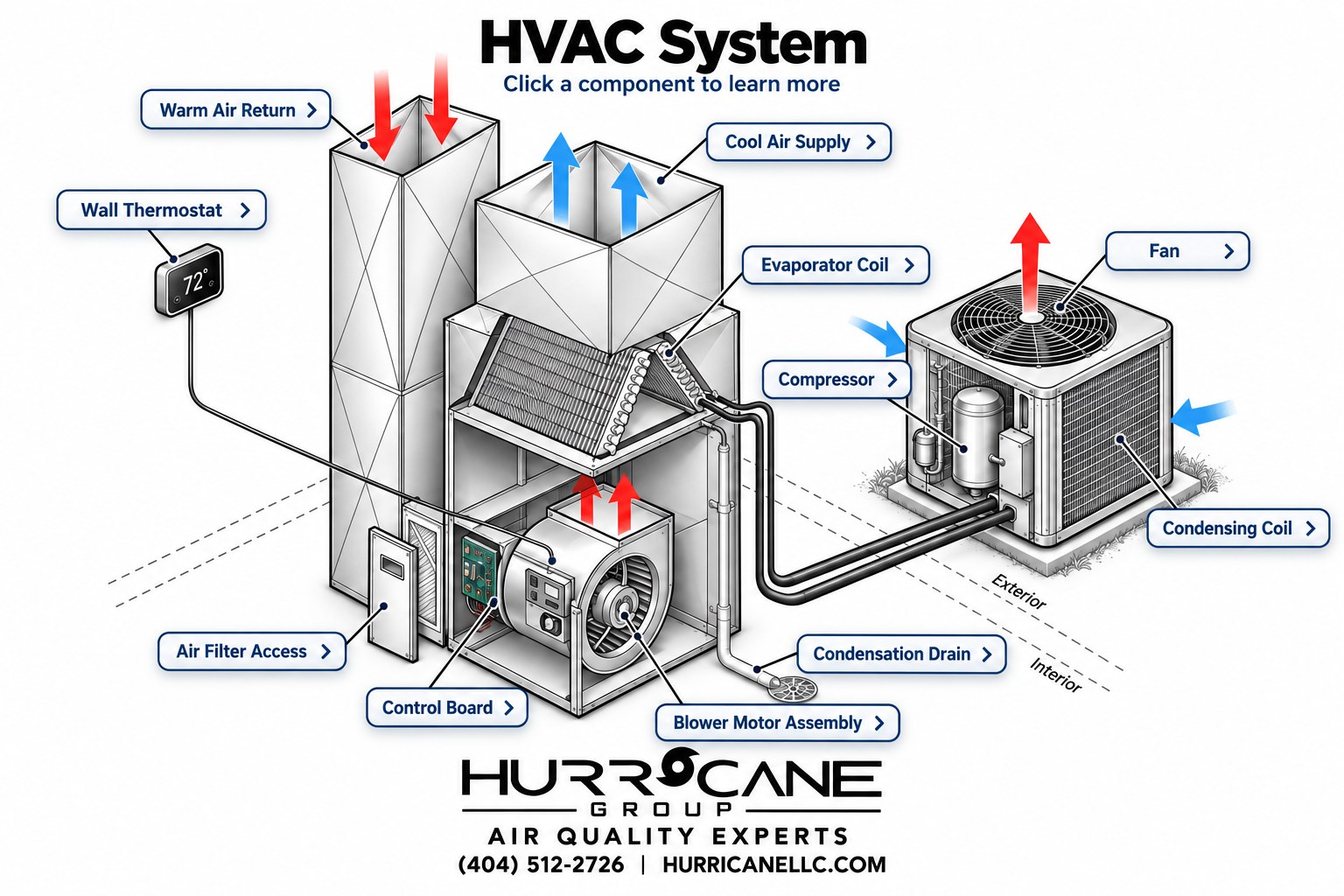
See where it sits in the system
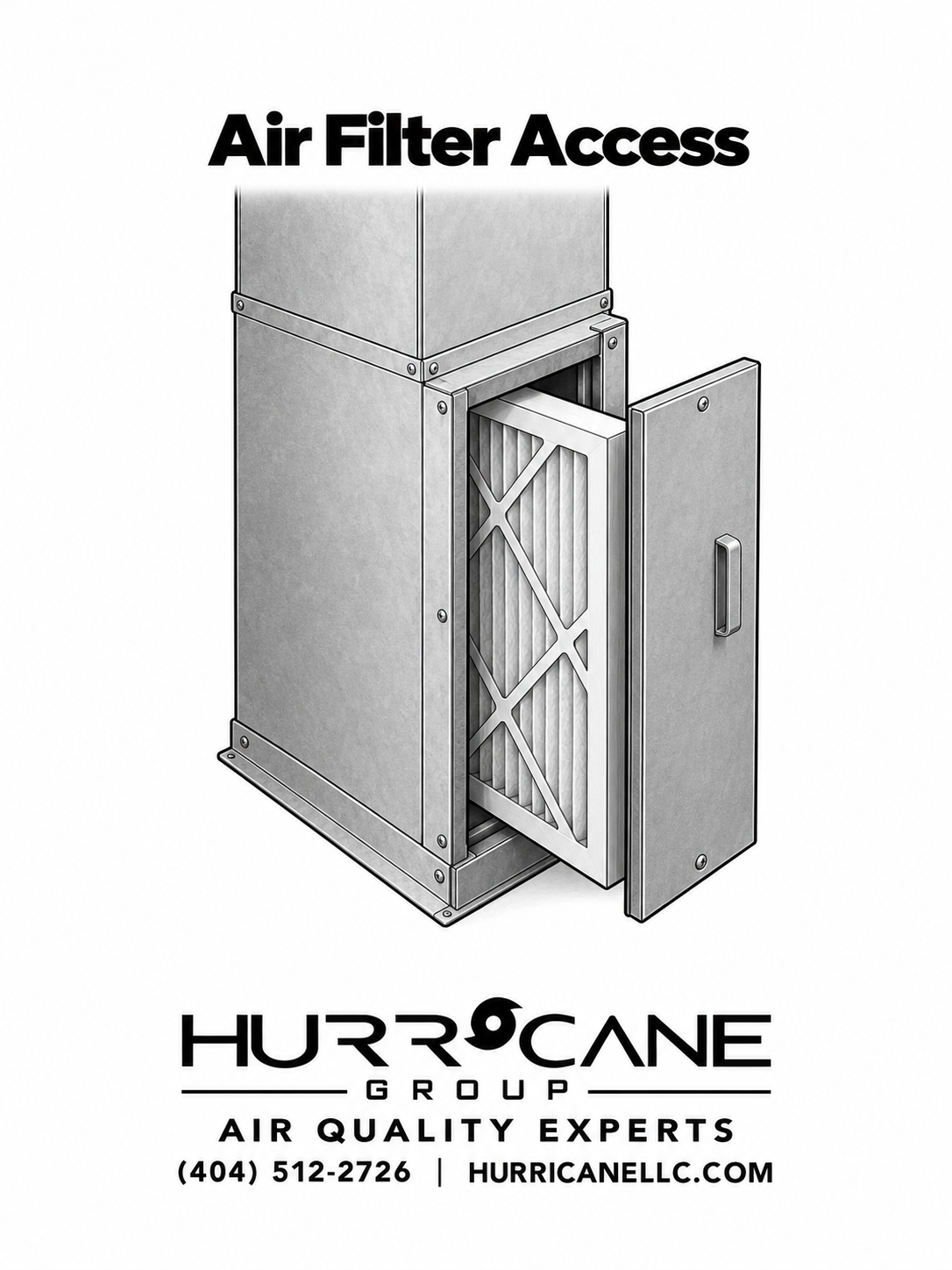
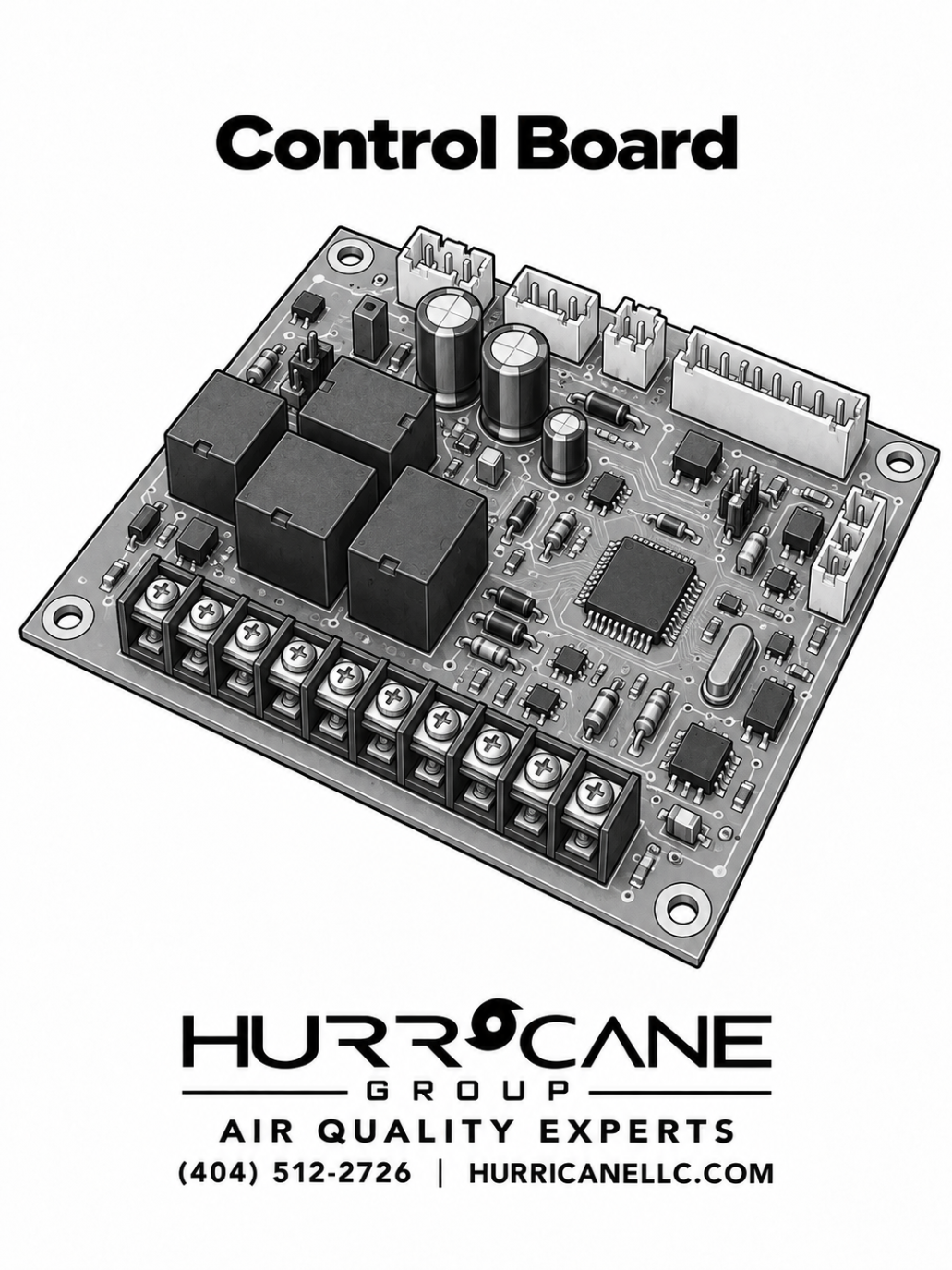
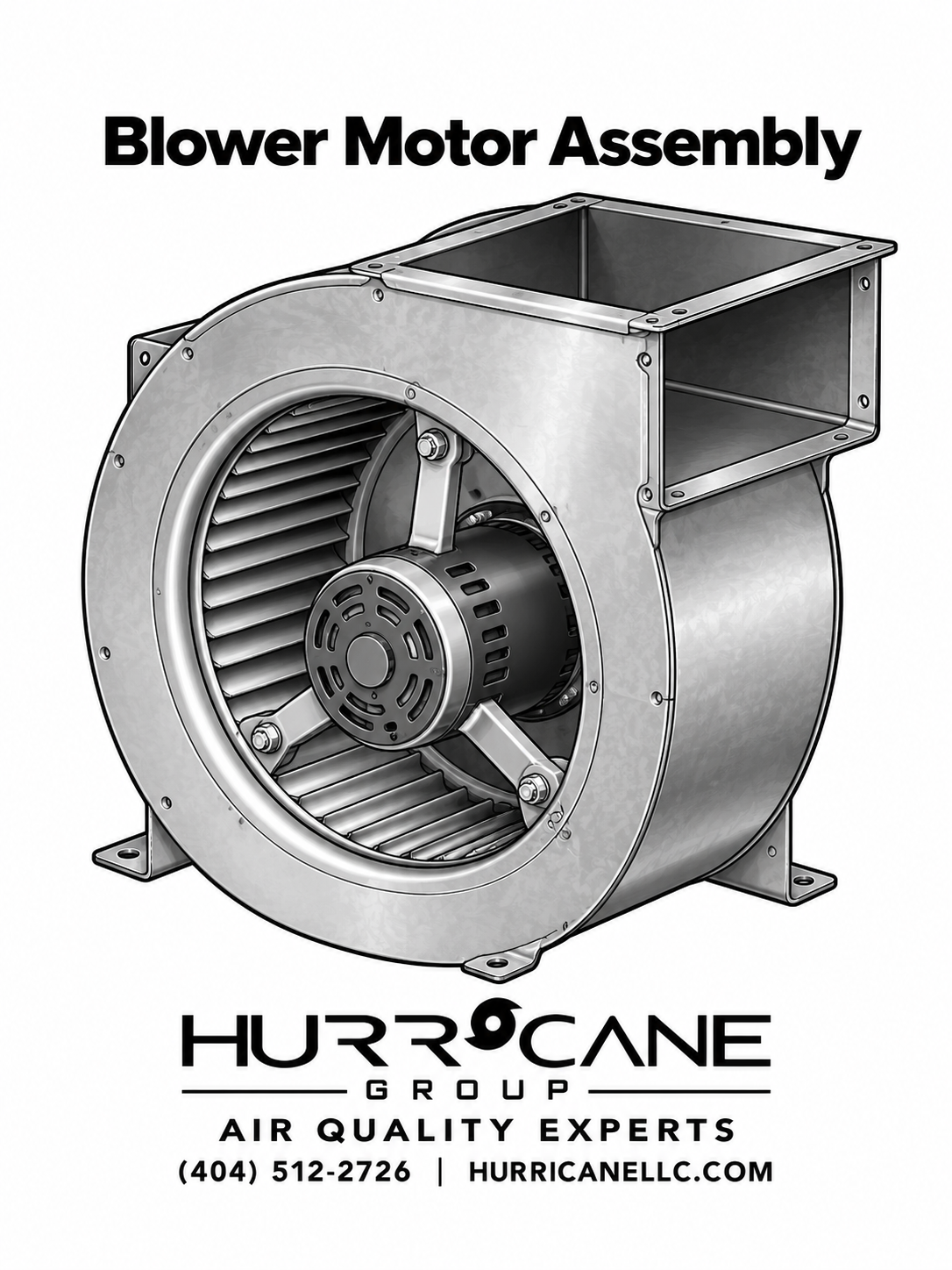
Other parts
Evaporator Coil trouble in Roswell?
Call (404) 236-6343 or request a visit. See also HVAC repair services.