Musty guestroom odor
PTAC coils and drain pans grow biofilm that guests notice within seconds of entering a room.
Hotels, Resorts & Hospitality · Metro Atlanta, GA
Regulatory compliance, operational continuity and verified air quality — delivered with zero disruption to your hotels operation in Metro Atlanta, GA. Certified crews, engineered containment, and a documented report at handover.
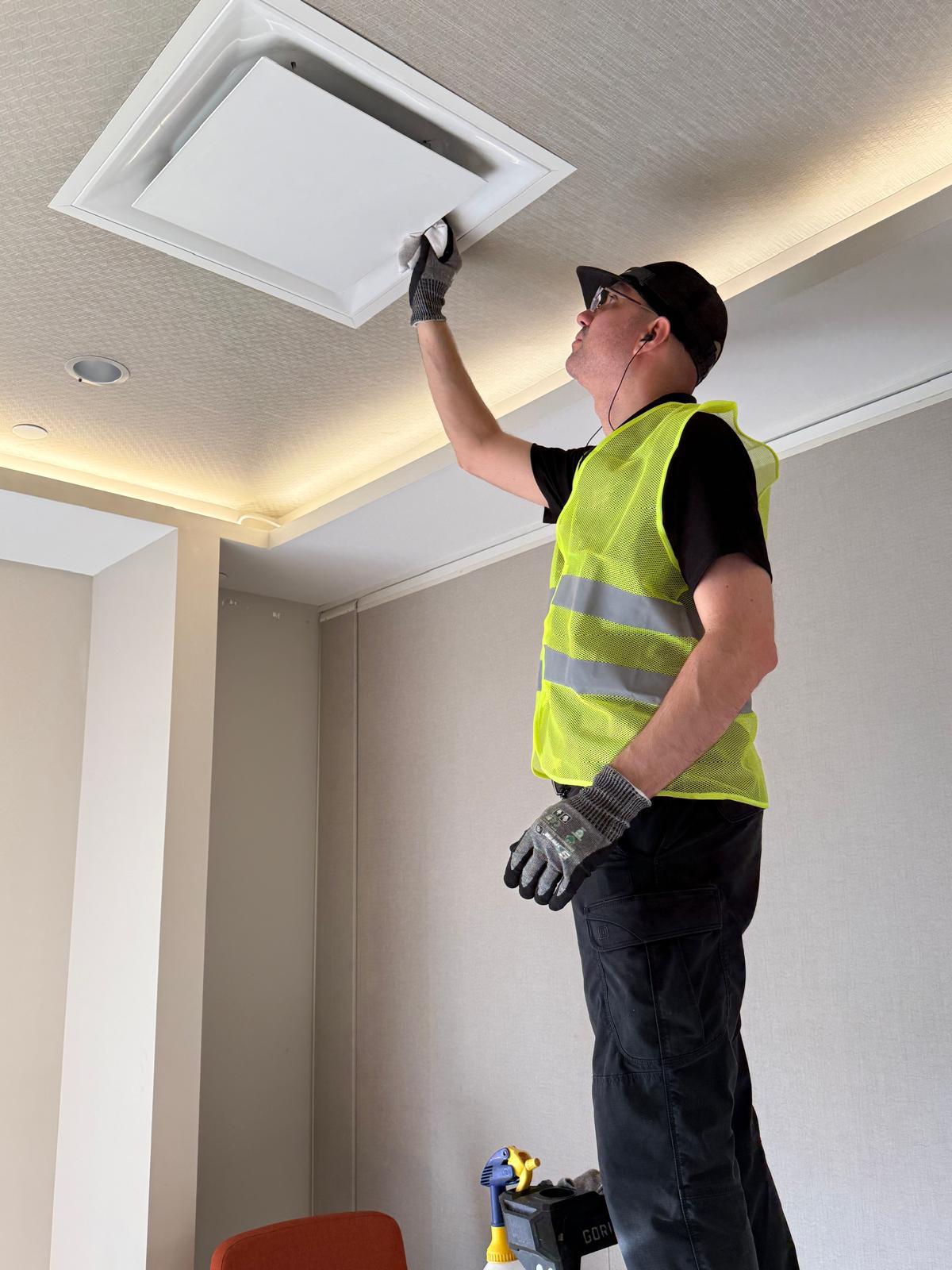
Hotels in Metro Atlanta, GA share a specific set of failure modes in their HVAC systems. Below are the four we are called about most, and the standards that govern how each one has to be corrected and documented.
PTAC coils and drain pans grow biofilm that guests notice within seconds of entering a room.
A single air-quality complaint in a public review costs more than the cleaning.
Flag inspectors check registers, PTAC filters and coil condition.
Rooms out of service cost revenue every night the work runs long.
| Standard | How it applies |
|---|---|
| IICRC-certified source removal | Verified source removal on guestroom and common-area systems. |
| ASHRAE 62.1 | Ventilation and filtration expectations for hospitality occupancies. |
| NFPA 96 | Kitchen exhaust cleaning for property restaurants and banquet kitchens. |
| EPA-registered chemistry | Labeled antimicrobial treatment for coils and drain pans. |
Baseline indoor air quality testing, whole-system disinfection and a corrective plan that resolves sick building syndrome complaints at the source.
Every project follows the same sequence, whether it is one air handler or a full campus. Each step produces evidence that ends up in your handover report.
Every system is filmed before a brush touches it. The baseline footage sets the scope, identifies damage and closed dampers, and becomes the first half of your before/after record.
Work zones are isolated and held under negative pressure with HEPA-filtered machines, so debris leaves through the equipment instead of into the occupied building.
Rotary brushes, air whips and compressed-air tools release bonded debris while the vacuum holds continuous capture — source removal, not surface dusting.
Once the system is physically clean, labeled antimicrobial chemistry is applied to duct interiors, coils and pans, with product, dilution and dwell time logged.
Post-clean camera footage, airflow readings and particle counts are compiled into one report with technician credentials, standards applied and a floor-plan reference.
We typically run a rolling block that matches your out-of-order allowance — often eight to twelve rooms at a time — and hand each block back the same day after coil, pan and register work is finished.
Yes. Grease-bearing exhaust is cleaned to NFPA 96 with hinge kits, access panels and a dated certificate posted at the hood.
Usually yes. Complaint patterns map to measurable causes — low outdoor air, high CO2, humidity above 60 percent, or particulate from a fouled system. We test by zone and report which of those is driving your complaints.
No. Disinfecting a loaded system is temporary. Physical source removal comes first, disinfection second, and the ventilation issue that allowed the problem gets named in the corrective plan.
Yes. Most commercial work in Metro Atlanta runs outside normal operating hours. We build the schedule around your occupancy and hand each area back clean and ready for use before your team returns.