
Commercial service
Fire Damper Inspection in Atlanta
Fire and smoke dampers sit inside ductwork where it passes through fire-rated walls and floors. In a fire, they close to stop flames and smoke from traveling through the duct system into other parts of the building. A damper that is blocked by debris, painted shut or missing its fusible link will not close when it matters, which is why codes require periodic inspection and testing.
Commercial Air Care inspects, tests and cleans fire and smoke dampers in commercial buildings across Metro Atlanta. Each damper is located, accessed, drop-tested where applicable, cleaned and reset, and recorded in a damper-by-damper report your facility can present to the fire marshal.
Who needs fire damper inspection
- Hospitals and healthcare facilities
- Hotels and multi-story commercial buildings
- Office towers and multi-tenant buildings
- Schools and university buildings
- Government and municipal facilities
- Any building with a fire marshal or accreditation inspection coming up
Our process, step by step
Step 1
Locate dampers
We use building drawings and field inspection to locate and number each damper.
Step 2
Access
Access panels are opened or added where missing so each damper can be reached.
Step 3
Inspect and test
Each damper is inspected for obstruction and damage, and tested for full closure.
Step 4
Clean and reset
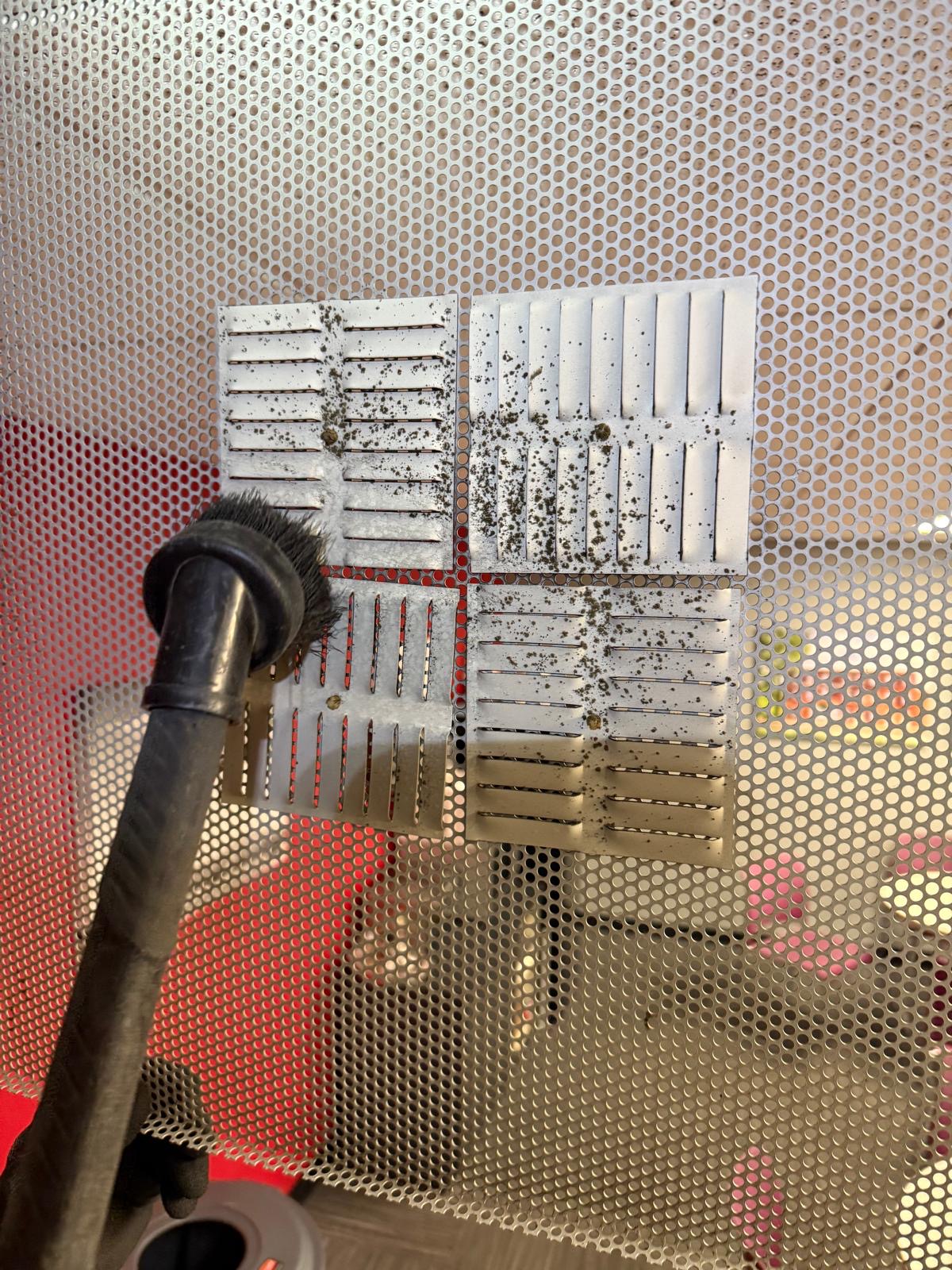
Debris is cleaned from the blades and track and the damper is reset to the open position.
Step 5
Tag and photograph
Each damper is tagged and photographed with its location.
Step 6
Deficiency report
You receive a damper-by-damper report listing pass, fail and recommended repairs.
Standards we follow
NFPA 80
Fire doors and other opening protectives, including fire damper inspection and testing.
NFPA 105
Smoke door assemblies and other opening protectives, including smoke dampers.
Local fire code
Fire marshals review damper records during inspections.
OSHA
Lift, ladder and above-ceiling work safety controls.
How often it should be done
NFPA 80 and NFPA 105 generally call for testing within one year of installation and then every four years, with hospitals typically on a six-year cycle. Your authority having jurisdiction may require a different interval.
Documentation you receive
- Damper-by-damper inventory with location and ID tag
- Pass/fail result for each damper
- Photos of each damper
- Deficiency and repair list for your fire marshal file
Frequently asked questions
- How often do fire dampers need inspection?
- Generally within a year of installation and every four years after, with hospitals typically every six years. Your local authority may differ.
- What happens if a damper fails?
- We document it with photos and a repair recommendation so it can be corrected before your inspection.
- Can you add access panels?
- Yes. Where a damper has no access, we can install an access panel so it can be tested.
- Do you clean the dampers?
- Yes. Blades and tracks are cleaned so the damper can close fully.
- Will we get a report for the fire marshal?
- Yes. You get a damper-by-damper report with photos and pass/fail results.
Service areas
Schedule a free site assessment
Commercial and industrial buildings across Metro Atlanta. After-hours crews available.