Hospital-acquired infection (HAI) risk
Settled dust in supply trunks and AHU plenums carries viable spores directly into patient rooms and prep areas.
Hospitals & Medical Centers · Metro Atlanta, GA
Regulatory compliance, operational continuity and verified air quality — delivered with zero disruption to your hospitals operation in Metro Atlanta, GA. Certified crews, engineered containment, and a documented report at handover.
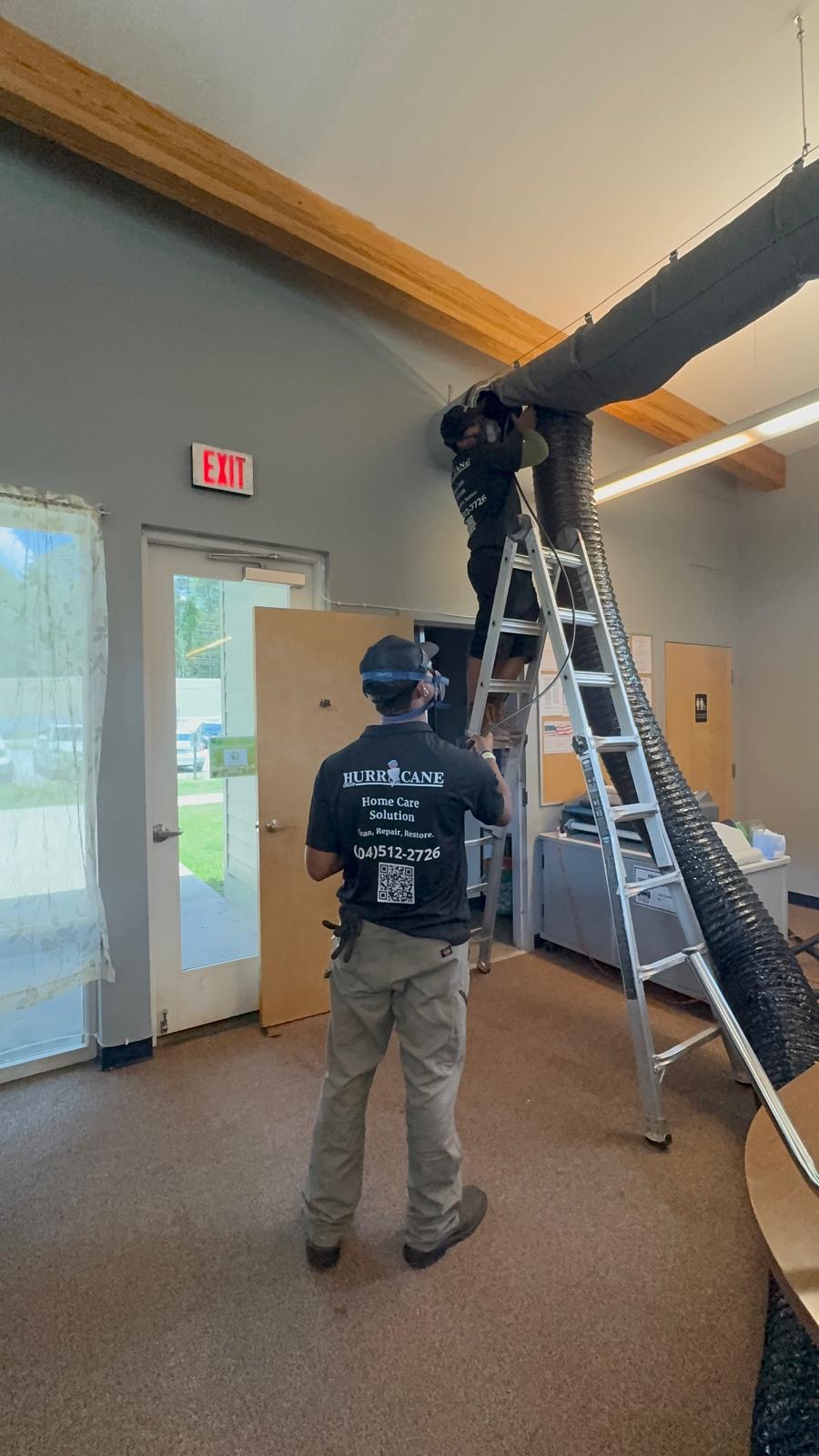
Hospitals in Metro Atlanta, GA share a specific set of failure modes in their HVAC systems. Below are the four we are called about most, and the standards that govern how each one has to be corrected and documented.
Settled dust in supply trunks and AHU plenums carries viable spores directly into patient rooms and prep areas.
Cleaning without engineered containment can reverse the pressure relationship between isolation rooms and corridors.
Operating suites and ED wings cannot close, so work must move in small, fully documented zones overnight.
Accreditation surveyors ask for before/after imagery and particle data that most vendors never capture.
| Standard | How it applies |
|---|---|
| IICRC-certified source removal | Source removal, verification and cleanliness acceptance for the full HVAC system. |
| ASHRAE 170 / 62.1 | Ventilation and air-change expectations for healthcare occupancies. |
| ICRA containment | Infection control risk assessment barriers, HEPA negative air and daily sign-off with your IP team. |
| OSHA 1910 | Confined space, fall protection and respiratory protection for every technician on site. |
Fire and smoke damper inspection and testing, grease-bearing exhaust cleaning and life-safety documentation prepared for AHJ and insurer review.
Every project follows the same sequence, whether it is one air handler or a full campus. Each step produces evidence that ends up in your handover report.
Every system is filmed before a brush touches it. The baseline footage sets the scope, identifies damage and closed dampers, and becomes the first half of your before/after record.
Work zones are isolated and held under negative pressure with HEPA-filtered machines, so debris leaves through the equipment instead of into the occupied building.
Rotary brushes, air whips and compressed-air tools release bonded debris while the vacuum holds continuous capture — source removal, not surface dusting.
Once the system is physically clean, labeled antimicrobial chemistry is applied to duct interiors, coils and pans, with product, dilution and dwell time logged.
Post-clean camera footage, airflow readings and particle counts are compiled into one report with technician credentials, standards applied and a floor-plan reference.
Yes. We break the building into small zones, build ICRA-appropriate containment, hold negative pressure with HEPA machines and work in overnight windows agreed with nursing leadership. Only the zone under containment is out of service — usually a handful of rooms at a time.
Each zone gets pre- and post-clean camera footage, vacuum-test verification on representative runs and particle counts at the diffuser. Everything lands in one report tied to a floor plan so infection prevention can file it.
A dated record identifying each damper or hood by location, the condition found, the corrective action taken, and the technician who performed it. That is exactly the format of the binder we hand over.
It is photographed, logged as a deficiency with its location, and reported to you the same day. Repairs are quoted separately so nothing is done to life-safety equipment without your written approval.
Yes. Most commercial work in Metro Atlanta runs outside normal operating hours. We build the schedule around your occupancy and hand each area back clean and ready for use before your team returns.