Commercial service
Kitchen Exhaust Hood Cleaning in Atlanta
Every commercial kitchen that cooks with grease sends grease-laden vapor up through the hood, into the exhaust duct and out through the rooftop fan. Over time that grease coats the inside of the system, and a single flare-up can ignite it. Kitchen exhaust cleaning is one of the most important fire prevention tasks a restaurant performs, and fire inspectors check for it.
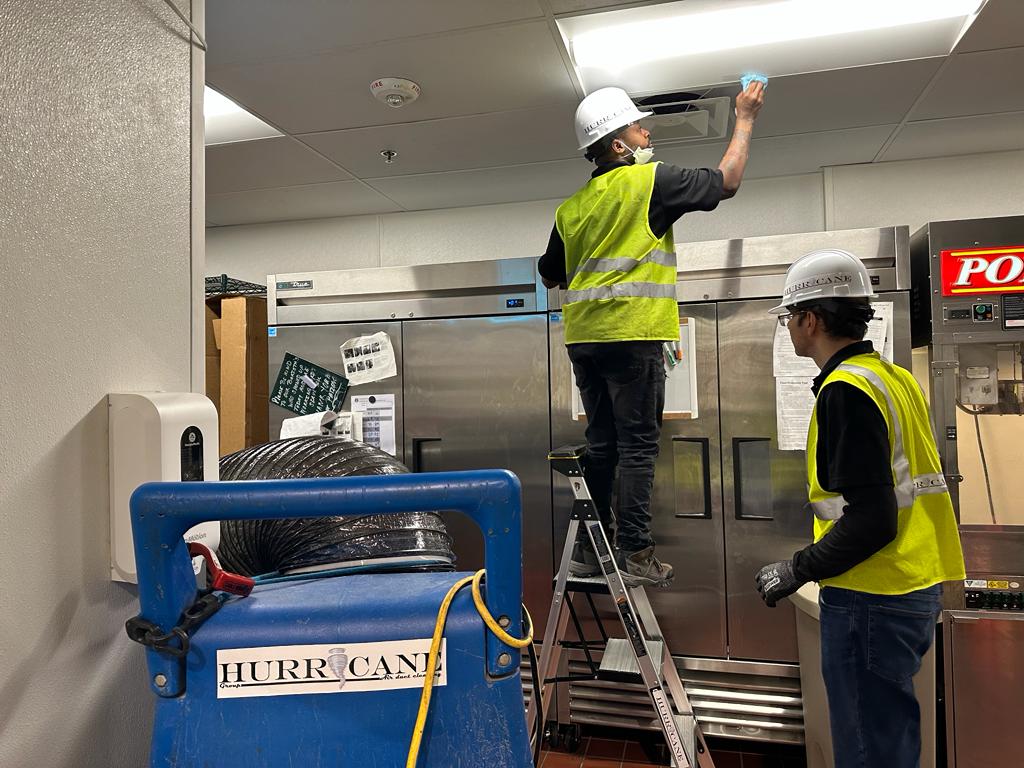
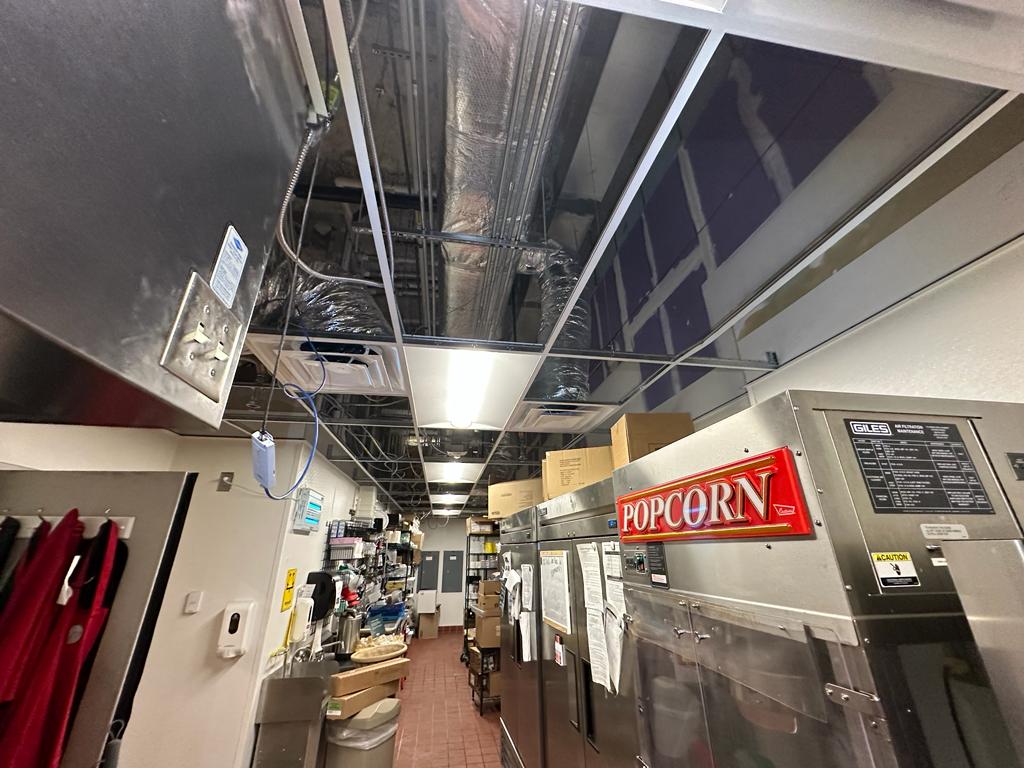
Commercial Air Care cleans the full kitchen exhaust path for restaurants and commercial kitchens in Metro Atlanta: hood, filters, plenum, duct riser and rooftop fan. Work is done overnight after close, the kitchen is protected and cleaned, and a dated service sticker is placed on the hood with a photo report for your records.
Who needs kitchen exhaust hood cleaning
- Full-service and quick-service restaurants
- Hotel and banquet kitchens
- School, hospital and corporate cafeterias
- Food processing and commissary kitchens
- Bars and concession operations with fryers or grills
- Franchise locations with brand-standard inspection schedules
Our process, step by step
Step 1
Inspect the system
We trace the hood, duct and fan, and identify access panels, hinge kits and rooftop conditions.
Step 2
Protect the kitchen
Cooking equipment and surfaces are covered and runoff is directed to containment.
Step 3
Degrease the hood and filters
Hood interiors, plenums and filters are scraped and degreased to bare metal.
Step 4
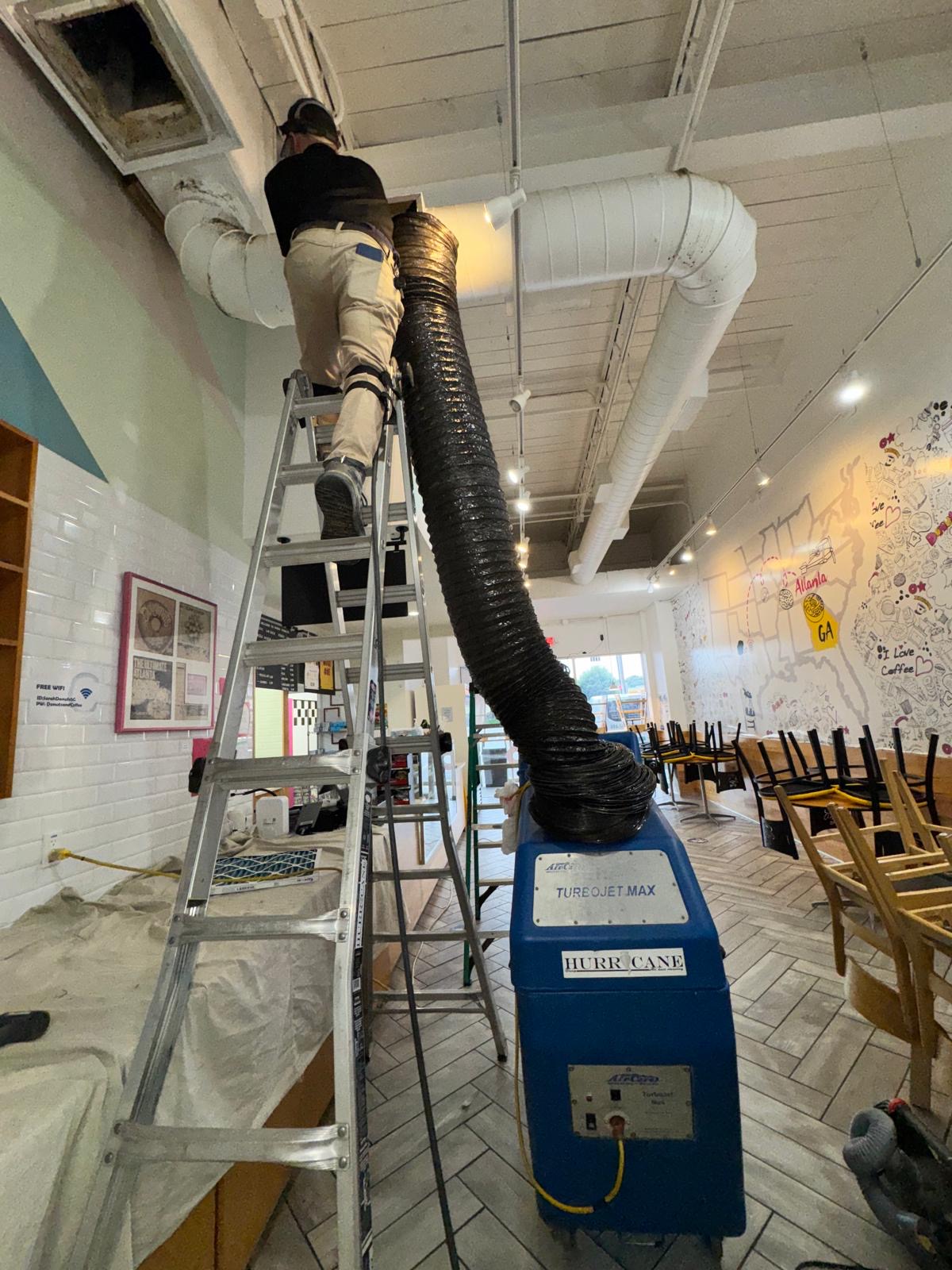
Clean the duct and fan
The duct riser is cleaned through access panels and the rooftop fan is cleaned, inspected and returned to service.
Step 5
Restore the kitchen
Covers are removed and the kitchen is wiped down so it is ready for the morning shift.
Step 6
Sticker and report
A dated service sticker is placed on the hood, and you receive before and after photos.
Standards we follow
NFPA 96
The standard for ventilation control and fire protection of commercial cooking operations, including exhaust cleaning intervals.
Local fire code
Fire inspectors check service stickers and records during routine inspections.
OSHA
Roof access, ladder and chemical handling controls for every crew.
Insurance
Many carriers require documented NFPA 96 cleaning for restaurant policies.
How often it should be done
NFPA 96 sets intervals by cooking volume: monthly for solid-fuel cooking, quarterly for high-volume operations such as 24-hour restaurants, charbroiling or wok cooking, semiannually for moderate-volume kitchens and annually for low-volume operations.
Documentation you receive
- Dated service sticker on the hood
- Date-stamped before and after photos of every system section we open
- Written service report listing units, runs and components cleaned
- Notes on damaged, missing or inaccessible components found on site
- Certificate of service for insurance, fire marshal and audit files
Frequently asked questions
- How often does a restaurant hood need cleaning?
- It depends on cooking volume under NFPA 96 — commonly quarterly for busy kitchens and semiannually for moderate ones.
- Do you clean the rooftop exhaust fan?
- Yes. We clean the full path — hood, filters, duct and rooftop fan — not just the visible hood.
- When do you do the work?
- Overnight, after your kitchen closes, so the kitchen is ready for the next shift.
- Do we get a sticker for the fire inspector?
- Yes. A dated service sticker is placed on the hood and you receive a photo report.
- Can you install access panels if our duct has none?
- Yes. We can add access panels so the full duct can be cleaned and inspected.
Service areas
Schedule a free site assessment
Commercial and industrial buildings across Metro Atlanta. After-hours crews available.