Condensate and drip risk
Dirty diffusers and cold ductwork produce condensate directly over open product lines.
Food & Beverage Processing Plants · Metro Atlanta, GA
Regulatory compliance, operational continuity and verified air quality — delivered with zero disruption to your food processing operation in Metro Atlanta, GA. Certified crews, engineered containment, and a documented report at handover.
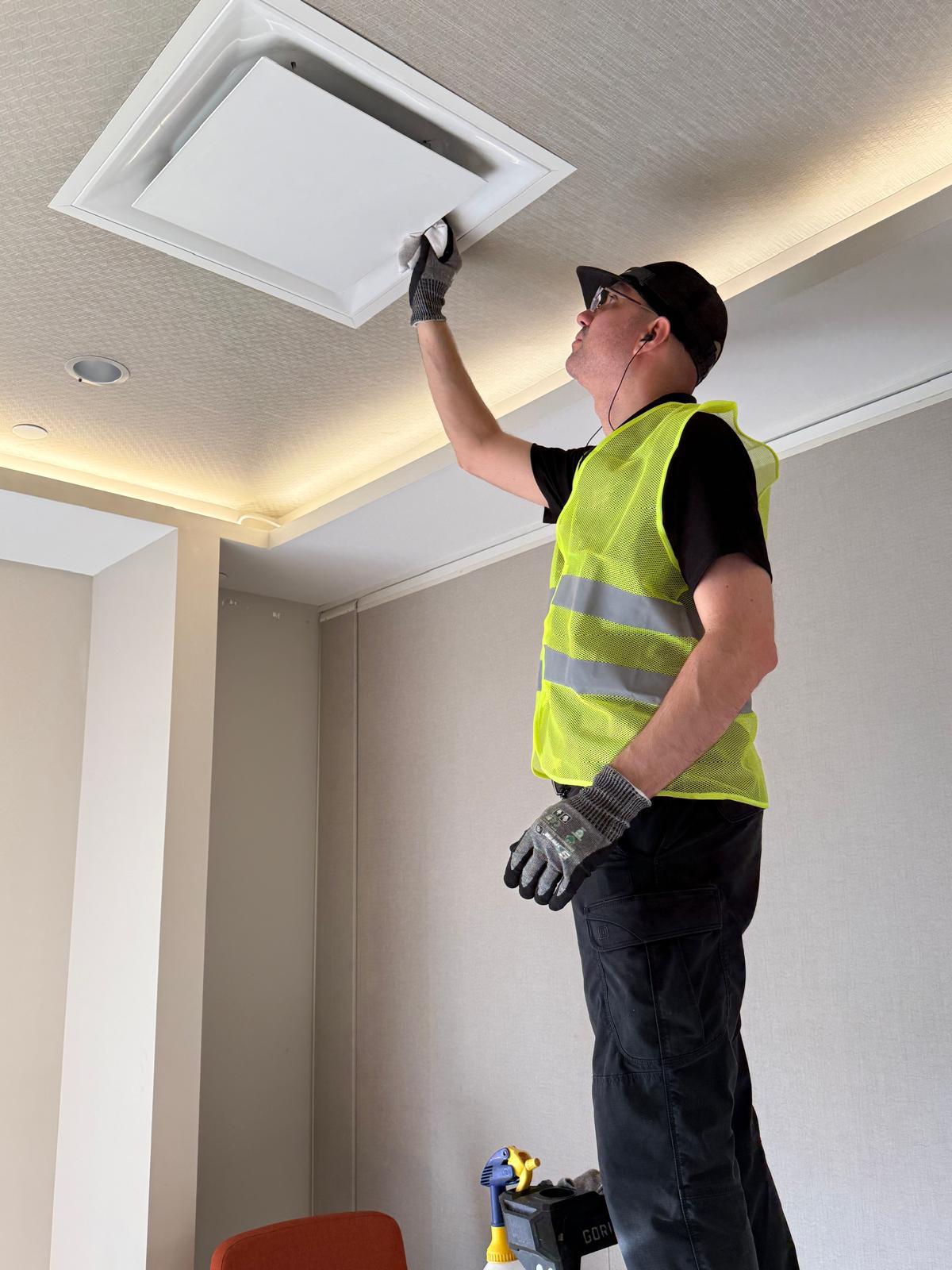
Food processing in Metro Atlanta, GA share a specific set of failure modes in their HVAC systems. Below are the four we are called about most, and the standards that govern how each one has to be corrected and documented.
Dirty diffusers and cold ductwork produce condensate directly over open product lines.
Ceiling voids and return plenums are classic harborage points auditors check first.
Shared air paths move allergen dust between production rooms.
Visible overhead soil is one of the fastest ways to lose points in a GFSI audit.
| Standard | How it applies |
|---|---|
| IICRC-certified source removal | Documented source removal and verification of the full system. |
| NFPA 96 | Grease-bearing exhaust cleaning where cooking processes are present. |
| FDA / GFSI expectations | Overhead sanitation evidence for third-party food-safety audits. |
| EPA-registered sanitizers | Food-contact-appropriate chemistry with logged application. |
Fire and smoke damper inspection and testing, grease-bearing exhaust cleaning and life-safety documentation prepared for AHJ and insurer review.
Every project follows the same sequence, whether it is one air handler or a full campus. Each step produces evidence that ends up in your handover report.
Every system is filmed before a brush touches it. The baseline footage sets the scope, identifies damage and closed dampers, and becomes the first half of your before/after record.
Work zones are isolated and held under negative pressure with HEPA-filtered machines, so debris leaves through the equipment instead of into the occupied building.
Rotary brushes, air whips and compressed-air tools release bonded debris while the vacuum holds continuous capture — source removal, not surface dusting.
Once the system is physically clean, labeled antimicrobial chemistry is applied to duct interiors, coils and pans, with product, dilution and dwell time logged.
Post-clean camera footage, airflow readings and particle counts are compiled into one report with technician credentials, standards applied and a floor-plan reference.
That is usually the right window. We mobilize after line teardown, work under containment with product surfaces covered, and clear the area before pre-op inspection.
Only EPA-registered products labeled for the application, applied per label and logged. Product-contact surfaces are protected throughout and the SDS package goes into your sanitation file.
A dated record identifying each damper or hood by location, the condition found, the corrective action taken, and the technician who performed it. That is exactly the format of the binder we hand over.
It is photographed, logged as a deficiency with its location, and reported to you the same day. Repairs are quoted separately so nothing is done to life-safety equipment without your written approval.
Yes. Most commercial work in Metro Atlanta runs outside normal operating hours. We build the schedule around your occupancy and hand each area back clean and ready for use before your team returns.