Combustible dust accumulation
Process dust inside ductwork and on horizontal surfaces is both a fire and a deflagration hazard.
Industrial & Heavy Manufacturing Plants · Metro Atlanta, GA
Regulatory compliance, operational continuity and verified air quality — delivered with zero disruption to your industrial plants operation in Metro Atlanta, GA. Certified crews, engineered containment, and a documented report at handover.
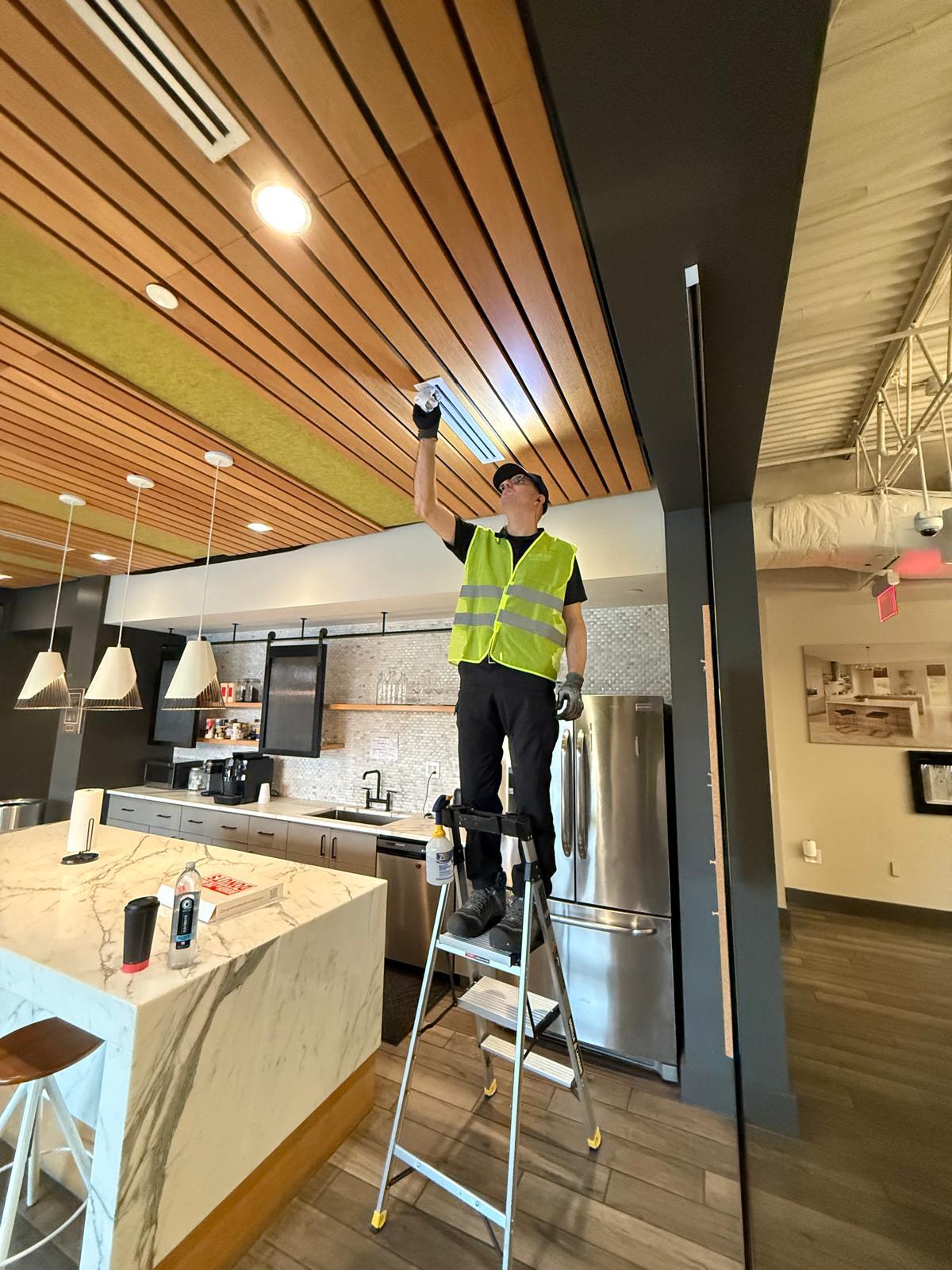
Industrial plants in Metro Atlanta, GA share a specific set of failure modes in their HVAC systems. Below are the four we are called about most, and the standards that govern how each one has to be corrected and documented.
Process dust inside ductwork and on horizontal surfaces is both a fire and a deflagration hazard.
Loaded systems starve the plant of makeup air and drive heat complaints and fan overload.
Any work must fit between shifts or into a scheduled outage.
Carriers increasingly ask for dated cleaning records on exhaust and makeup-air systems.
| Standard | How it applies |
|---|---|
| NFPA 652 / 91 | Combustible dust housekeeping and duct-system hazard control. |
| IICRC-certified source removal | Verified source removal across supply, return and exhaust. |
| OSHA 1910 | Hot work, confined space, LOTO and fall protection controls. |
| ASHRAE 62.1 | Ventilation baseline for occupied plant and office areas. |
Complete source-removal cleaning of supply, return and trunk lines, air handlers, coils and drain pans, finished with EPA-registered antimicrobial treatment.
Every project follows the same sequence, whether it is one air handler or a full campus. Each step produces evidence that ends up in your handover report.
Every system is filmed before a brush touches it. The baseline footage sets the scope, identifies damage and closed dampers, and becomes the first half of your before/after record.
Work zones are isolated and held under negative pressure with HEPA-filtered machines, so debris leaves through the equipment instead of into the occupied building.
Rotary brushes, air whips and compressed-air tools release bonded debris while the vacuum holds continuous capture — source removal, not surface dusting.
Once the system is physically clean, labeled antimicrobial chemistry is applied to duct interiors, coils and pans, with product, dilution and dwell time logged.
Post-clean camera footage, airflow readings and particle counts are compiled into one report with technician credentials, standards applied and a floor-plan reference.
Yes. We stage by cell, isolate with containment, and schedule the loud extraction work into shift changes or planned outages so the line keeps running.
We scope it explicitly: bonded and grounded vacuum equipment, no hot work in the zone, and removal sequenced so dust never becomes airborne in volume. Findings and quantities are documented.
A single air handler and its branch runs is typically one shift. Full-building programs are scoped per system so you get a phase-by-phase schedule before mobilization rather than an open-ended project.
Most commercial systems fall in a three to five year cycle. High-occupancy, high-dust or high-moisture facilities move to annual or biannual intervals — we set the interval from the baseline inspection, not a sales rule.
Yes. Most commercial work in Metro Atlanta runs outside normal operating hours. We build the schedule around your occupancy and hand each area back clean and ready for use before your team returns.